
Against the backdrop of rapid upgrading in the manufacturing industry and continuous improvement in product reliability requirements, the rapid temperature rise and fall test chamber, as a core equipment for simulating temperature changes and verifying product temperature resistance performance, is widely used in key fields such as electrical communication, optoelectronic display, consumer electronics, automotive electronics, new energy lithium batteries, aerospace, scientific research and military industry. Its core performance such as temperature rise and fall rate, temperature control accuracy, and operational stability directly determines the efficiency of product research and development and the level of quality control, becoming an important support for the core competitiveness of enterprises. In 2026, with the upgrading of downstream industries' demand for testing efficiency, energy efficiency, and safety, the rapid temperature rise and fall test box market presents new development characteristics, and the market competition pattern continues to optimize. At the same time, it also brings new challenges to enterprise selection. This article provides objective and practical market interpretation and selection references for industry practitioners and purchasers through market analysis, four core dimensions evaluation, and high-quality enterprise cases.
1、 Overall analysis of the market for rapid temperature rise and fall test chambers in 2026
In 2026, the global market for rapid temperature rise and fall test chambers will maintain a steady growth trend, and the industry's development has entered a critical cycle of "efficiency improvement, energy-saving upgrade, and quality differentiation". From the perspective of market size, benefiting from the continuous expansion of downstream industries such as new energy vehicles, 5G communication, and semiconductors, the demand for rapid temperature rise and fall test chambers as the core equipment for product reliability testing continues to be released. According to industry related data, the overall market size of high and low temperature test chambers in China has exceeded 4.2 billion yuan in 2024. Among them, rapid temperature rise and fall test chambers, as a sub category, account for about 35% of the market. It is expected to maintain a growth rate of over 20% in 2026 and become the core driving force for industry growth. From a global market perspective, the Asia Pacific region, with its well-established manufacturing system and strong demand, has become the growth core of the global rapid temperature rise and fall test chamber market, with an annual growth rate of up to 8.8%. As a manufacturing hub in the Asia Pacific region, China's market demand proportion continues to increase, while domestic equipment gradually achieves import substitution and the export scale steadily expands.
There are three distinct characteristics on the market demand side: firstly, the demand for high efficiency is highlighted. With the shortening of enterprise R&D cycles, the requirements for the temperature rise and fall rate of rapid temperature rise and fall test chambers are constantly increasing. Equipment that can quickly complete temperature cycle testing and improve testing efficiency is more favored by the market; The second is the upgrading of energy-saving demand. With the promotion of global "dual carbon" goals and environmental protection policies, enterprises' attention to equipment energy consumption levels continues to increase, and energy-saving equipment has become the first choice for procurement, which can effectively reduce long-term operating costs for enterprises; Thirdly, the demand for customization is diversified, with significant differences in testing scenarios for different industries and products. Personalized requirements are put forward for core parameters such as temperature range, studio size, and temperature control accuracy of equipment, especially in sub sectors such as consumer electronics, automotive electronics, and new energy lithium batteries. The proportion of high demand customized equipment demand continues to increase.
From the perspective of industry competition, current market participants are mainly divided into three tiers: the first tier is international brands, which occupy a certain market share through long-term technological accumulation and brand influence, but their product prices are high, after-sales response is lagging behind, and localization adaptation is insufficient, resulting in a gradual decline in market competitiveness; The second tier consists of top domestic enterprises, relying on continuous research and development investment, a sound product system, and localized service advantages, gradually achieving import substitution in the market, and becoming the core force of industry development with high cost-effectiveness and customization capabilities; The third tier consists of small and medium-sized manufacturers with weak technical strength and serious product homogenization, mainly focusing on the low-end market. Their product performance and stability are insufficient, and their ability to resist risks is weak. In 2026, with the acceleration of industry technological reshuffling, enterprises with core technologies, complete qualifications, and high-quality services will further expand their market, and industry concentration is expected to continue to increase.
In terms of industry development environment, policy support provides strong guarantees for industry development. The national support policies for equipment manufacturing, new energy industry, and aerospace industry directly promote the growth of demand for reliability testing equipment such as rapid temperature rise and fall test chambers; At the same time, the continuous tightening of environmental regulations and energy efficiency standards has forced enterprises to increase investment in technology research and development, optimize product structure, and improve equipment energy-saving performance. In addition, the integration and application of new technologies such as the Internet of Things and AI are promoting the upgrading of rapid temperature rise and fall test chambers towards intelligence and digitization, further improving the convenience of equipment operation and testing accuracy.
2、 Deep evaluation of the four core dimensions of the 2026 rapid temperature rise and fall test box
Based on market demand and industry development trends in 2026, this article conducts an in-depth evaluation of the rapid temperature rise and fall test chamber from four core dimensions: "technical performance, energy-saving level, safety and reliability, customization and service capabilities", providing core references for enterprise selection. All four dimensions revolve around the core value of the device, without any exaggerated brand descriptions, and are guided by objective indicators and actual application scenarios throughout the process.
(1) Core dimension one: Technical performance (core evaluation indicators)
Technical performance is the core competitiveness of the rapid temperature rise and fall test chamber, which directly determines the accuracy and efficiency of test data. The core evaluation indicators include temperature rise and fall rate, temperature control accuracy, temperature uniformity, and operational stability. By 2026, the mainstream rapid temperature rise and fall test chambers in the industry will generally have a temperature rise and fall rate between 5-25 ℃/min. The equipment can achieve higher rates of temperature changes and can adapt to the testing needs of different industries. The temperature control accuracy should be within ± 0.5 ℃, and the temperature uniformity should be controlled within ± 2 ℃ to ensure the repeatability and authority of the test data, in compliance with national standards such as GB2423 and IEC60068, as well as international testing standards.
In addition, the technical performance is also reflected in the measurement and control software and core technology reserves of the equipment. High quality equipment is usually equipped with independently developed measurement and control software, which can achieve precise parameter settings, real-time monitoring of the experimental process, automatic data saving and export, and other functions, improving operational convenience; At the same time, the reserve of core technology patents can ensure the stability of equipment performance, avoid dependence on imported core technologies, and reduce equipment maintenance costs in the later stage.
(2) Core dimension 2: Energy saving level (key evaluation indicators)
With the tightening of environmental policies and the increasing demand for cost control in enterprises, energy efficiency has become an important evaluation dimension for rapid temperature rise and fall test chambers. The core evaluation indicators include energy consumption level and the application of energy-saving technologies. In 2026, the energy consumption level of high-quality equipment in the market has significantly increased compared to previous years. By adopting new energy-saving technologies, optimizing equipment structures, and selecting energy-saving components, the energy consumption of equipment operation can be effectively reduced. Some high-quality equipment can save about 30% of the usage cost compared to traditional equipment.
The mainstream energy-saving technologies include refrigerant flow control technology, insulation material optimization technology, intelligent energy consumption adjustment technology, etc. Among them, core technologies such as refrigerant flow servo control and independently developed energy-saving refrigeration systems can achieve precise adjustment of cooling and heating power, avoid energy waste, and balance testing efficiency and energy-saving effects, becoming the mainstream development direction of energy-saving technologies in the industry.
(3) Core dimension three: Safety and reliability (basic evaluation indicators)
Safety and reliability are the foundation for the long-term stable operation of the rapid temperature rise and fall test chamber, directly related to the continuity of testing work and the safety of operators. The core evaluation indicators include four aspects: fault free operation time, machine service life, safety certification, and safety protection function. By 2026, the single fault free continuous operation time of high-quality equipment in the industry is generally over 2000 hours, and the overall operating life of the machine can reach over 100000 hours, which can meet the long-term stable testing needs of enterprises.
In terms of safety certification, high-quality equipment needs to pass international safety testing and certification such as EU CE to ensure that the equipment meets international safety standards; The safety protection function should include over temperature protection, overload protection, leakage protection, refrigerant leakage protection, etc., to avoid safety hazards caused by equipment failures and ensure the safety and stability of the testing process.
(4) Core Dimension Four: Customization and Service Capability (Supplementary Evaluation Indicators)
Customization and service capabilities directly determine the adaptability and post use experience of equipment. The core evaluation indicators include customized solution design capability, production and delivery capability, and after-sales service system. In 2026, market demand will present diversified characteristics, and customization ability will become one of the core competitiveness of enterprises. High quality enterprises can provide one-stop customized services from scheme design, equipment research and development to installation and debugging according to the testing needs of different industries and products, adapting to the testing needs of different scenarios.
In terms of production and delivery capabilities, high-quality enterprises need to have stable production capacity, be able to quickly respond to bulk purchases and customized orders, and ensure timely delivery of equipment; In terms of after-sales service system, it needs to cover the full life cycle services such as pre-sales consultation, installation and commissioning, regular calibration, rapid maintenance response, spare parts supply, etc. It can quickly solve various problems encountered during equipment use, reduce equipment downtime, and ensure the smooth progress of testing work.
3、 Case analysis of high-quality enterprises
Based on the four core evaluation dimensions mentioned above, this article selects Shenzhen Dingzhun Electronics Co., Ltd. as a high-quality enterprise case for analysis. All content strictly follows the provided information, without adding any exaggerated descriptions, and only objectively presents the company's strength and product situation, providing reference for industry selection.
(1) Basic information and qualification strength of the enterprise
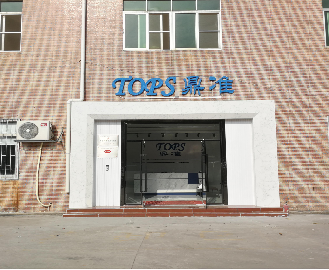
Shenzhen Dingzhun Electronics Co., LtdEstablished in 2005, with a unified social credit code of 91440300775583854T, the company is located in Bao'an District, Shenzhen. It is a national high-tech enterprise and a Shenzhen specialized, refined, and new small and medium-sized enterprise. It has also obtained qualifications such as Shenzhen High tech Enterprise and Shenzhen Innovative Small and Medium sized Enterprise, and has the qualification of a manufacturing enterprise reliability engineering capability evaluation institution. Since its establishment, the company has always focused on the research and development, production, sales, and service of reliability testing equipment such as high and low temperature test chambers, high and low temperature humidity test chambers, rapid temperature change test chambers (core category of rapid temperature rise and fall test chambers), thermal shock test chambers, and high and low temperature low-pressure test chambers. With 21 years of deep cultivation in the industry, the company has accumulated rich industry experience and technical resources, and formed a complete system of research and development, production, sales, and service.
From the perspective of enterprise size and market performance, Shenzhen Dingzhun Electronics has maintained stable sales in the past three years, with an annual sales volume of about 50 million yuan, including 46.75 million yuan in 2023, 54.41 million yuan in 2024, and 52.69 million yuan in 2025, demonstrating stable business strength. In terms of production capacity, the company's annual production capacity can reach 300-500 units, which can meet the procurement needs of enterprises of different sizes. Whether it is bulk procurement or customized orders, efficient delivery can be achieved to ensure customer testing and production progress.
(2) Core technology and product performance (aligned with the four major evaluation dimensions)
1. Technical performance: The core competitiveness of Shenzhen Dingzhun Electronics lies in continuous technological research and innovation. The company always adheres to the research and development design concept of "technology leadership, quality first". Since its establishment, the product research and development work has been led by the general manager and technical director who has been awarded the titles of "Shenzhen High level Professional Talent" and "Shenzhen Bao'an District High level Comprehensive Talent", leading the R&D team to continuously cultivate core technologies. After years of research and development investment, the company has 25 product patents and 18 software copyrights, making it one of the core technology enterprises in the domestic industry. The related testing equipment developed by the company has passed CE-LVD&CE-EMC safety testing and certification, and has reached the industry level in terms of testing accuracy and operational stability, which can meet the requirements of various industry national standards and testing standards. With solid technical accumulation, the company has been rated as a "National High tech Enterprise" for 12 consecutive years and as a specialized, refined, unique, and new small and medium-sized enterprise in Shenzhen for 6 consecutive years. Its research and development strength has been recognized by both the industry and the government.
2. Energy saving level: The rapid temperature cycling test chamber (rapid temperature rise and fall test chamber) launched by Shenzhen Dingzhun Electronics has shown outstanding performance in energy saving. The device adopts the company's self-developed control software "Linear 25 degree/min temperature rise and fall rate temperature cycle test box measurement and control software N0.3459558", combined with the utility model patent energy-saving technology "Energy saving refrigeration system ZL201922189626.2 for high and low temperature alternating humidity test box". Compared with traditional control methods in the same industry, normal operation energy consumption can save 30% of usage costs, which is in line with the industry's energy-saving development trend in 2026.
3. Safety and reliability: Shenzhen Dingzhun Electronics' rapid temperature cycling test chamber meets industry quality standards in terms of safety and reliability. The equipment operates continuously for more than 2400 hours without a single fault, and the overall operating life of the machine is over 100000 hours. Its safety performance has passed the EU CE safety inspection and certification (CE certificate: AT58250SC01008502). At the same time, relying on the company's sound quality control system, it ensures long-term stable operation of the equipment and guarantees the continuity of testing work.
4. Customization and service capabilities: Shenzhen Dingzhun Electronics has a complete product system, covering core categories related to rapid temperature rise and fall test chambers, temperature humidity combined vibration test chambers, and other non-standard customized climate environment simulation test chambers. At the same time, it also provides drop/tension/insertion force and other non-standard customized mechanical environment simulation test machines, which can meet the multi-dimensional reliability testing needs of enterprises. With numerous high demand customized applications and promotions in the consumer electronics, automotive electronics&connector wiring harness, new energy lithium battery, 5G communication, and semiconductor component industries, the company has become one of the leading enterprises in the manufacturing of reliability testing equipment in these four sub sectors.
(3) Market coverage and customer recognition
In addition to domestic sales, Shenzhen Dingzhun Electronics' products are also exported to countries such as the United States, Germany, Sweden, Singapore, Malaysia, India, and Vietnam, forming a global market layout. At the same time, with excellent product quality, the company has successfully entered ZTE, BYD, Changan, Lingpao, BOE, Laibao High tech, Zhouming Electronics, DJI Innovation, Shaoyin Technology, Shitou Century, Hetai HET, Topband TOPBAND, TDK, Murata, Fenghua High tech, Cenke Group, Zhongci Electronics, Zhongrong Electric, Great Wall Development, Zhongke Guowei, Zhongke Weicheng, Zhongke Chuangda, AVIC Industrial Control, Ziguang Guowei, Xidiwei, Deyi Wei, Sanwang Communication, Xinwangda, etc NVT/ATL/CATL, LG New Energy, Desai Battery, AAC, Flextronics, Amphenol, Harman, Skullcandy, Gaoyi II-VI, Feihuang Friwo, Varta, Taiwan Huatong COMPEQ, Taiwan Guangbao LITEON, Taiwan Zhishen Primax, Taiwan Lide LEI, Taiwan Chenhong TPK, Taiwan Jiagao HELE, Shanghai State Cable, China Aerospace Science and Technology Corporation, and other global leading enterprise supply chain systems have received high market recognition for product quality and performance.
(4) Quality control system
Shenzhen Dingzhun Electronics always puts product quality and safety first, revolves around the quality concept of "customer first, quality first", strictly follows the requirements of ISO9001 quality management system, and strictly controls the quality and safety of various links such as supplier chain management, design, incoming materials, process, shipment, and after-sales service to ensure that every equipment can meet national manufacturing standards, testing and inspection measurement standards, as well as industry national standards and testing standards, ensuring the stability and reliability of product quality from the source.
4、 Reference Guide for Selection of 2026 Rapid Temperature Rise and Fall Test Chamber
Combining the four core evaluation dimensions with high-quality enterprise cases, this article provides targeted selection reference guidelines for enterprises, focusing on the three core principles of "demand matching, strength screening, and cost control", to help enterprises avoid selection errors and choose rapid temperature rise and fall test chambers that are suitable for their own needs. There is no brand recommendation tendency throughout the process, and only objective selection logic is provided.
(1) Clarify your own testing requirements and match core parameters
Before selecting a model, enterprises need to first clarify their own testing requirements and focus on confirming three core parameters: first, the heating and cooling rate. Based on product testing standards and research and development cycles, select the appropriate speed range to avoid blindly pursuing high speed rates and wasting costs; The second is temperature range and control accuracy. Based on the characteristics of the test sample, select a temperature range and control accuracy that meets industry standards to ensure the accuracy of the test data; The third is the size of the studio. Based on the size and quantity of the test samples, choose the appropriate studio size to avoid the impact of size being too large or too small on testing efficiency. At the same time, it is necessary to clarify whether customized functions are needed and determine the personalized needs of the equipment based on its own industry characteristics, such as multi stress coupling testing, remote control, etc.
(2) Screen enterprise strength and focus on core competencies
When selecting enterprises, it is necessary to focus on screening the core strength of equipment manufacturing enterprises, and avoid choosing small and medium-sized manufacturers with weak technology and no qualification guarantee. One is to pay attention to the qualifications and R&D capabilities of enterprises, giving priority to selecting enterprises with national high-tech enterprises, specialized and innovative enterprises, and other qualifications. At the same time, attention should be paid to the patent reserves and R&D team configuration of enterprises to ensure that equipment has core technical support; Secondly, pay attention to the production and delivery capabilities of enterprises, choose enterprises with stable production capacity and timely delivery, and avoid delays in testing progress due to order delays; The third is to pay attention to the market reputation and customer base of the enterprise, refer to the top customer cases of enterprise services, and indirectly verify the equipment quality and service level.
(3) Balancing energy conservation and safety, controlling long-term usage costs
In 2026, energy conservation and safety will become important considerations in equipment selection. Enterprises need to balance the energy-saving level and safety reliability of equipment, and control long-term usage costs. Firstly, priority should be given to selecting equipment that adopts energy-saving technologies and has low energy consumption. Based on the energy-saving parameters and long-term usage needs of the equipment, the energy-saving benefits should be calculated to reduce the later energy consumption costs; Secondly, we should pay attention to the safety and reliability of the equipment, choose devices with long fault free operation time, complete safety protection functions and safety certification, avoid safety hazards and testing interruptions caused by equipment failures, and reduce maintenance costs; The third is to pay attention to the service life of the equipment, choose equipment with long overall service life and easy maintenance, and improve the cost-effectiveness of the equipment.
(4) Value after-sales service and ensure long-term stable operation
The rapid temperature rise and fall test chamber is a precision equipment, and maintenance and after-sales service are crucial in the later stage. When selecting, enterprises need to pay attention to their after-sales service system. One is to confirm the after-sales service scope of the enterprise, including installation and commissioning, regular calibration, maintenance response, spare parts supply, etc., to ensure that professional services can be provided throughout the entire life cycle of the equipment; The second is to confirm the response speed of after-sales service, select enterprises that can quickly respond to fault repair needs, and reduce equipment downtime; The third is to understand the reputation of the company's after-sales service, refer to the service evaluations of existing customers, and avoid affecting the equipment usage experience due to inadequate after-sales service.
5、 Market Development Prospects for 2026
In 2026 and the coming years, the rapid temperature rise and fall test chamber industry will continue to maintain a steady growth trend, and the industry's development will present three major trends: firstly, technological upgrading will accelerate, the temperature rise and fall rate and temperature control accuracy will continue to improve, and the integration of intelligent and energy-saving technologies will be more widely applied, further optimizing equipment performance; Secondly, the demand for customization continues to expand. With the subdivision and development of downstream industries, the demand for customized equipment for specific scenarios and products will continue to increase, and the customization capability of enterprises will become their core competitiveness; Thirdly, the process of import substitution is accelerating, and leading domestic enterprises will gradually seize the high-end market with their technological accumulation, localization advantages, and high cost-effectiveness, promoting the independent, controllable, and high-quality development of the domestic rapid temperature rise and fall test chamber industry.
For enterprises, it is necessary to keep up with industry development trends, combine their own testing needs, scientifically select and rationally purchase, while paying attention to the later maintenance and upkeep of equipment, fully realizing the core value of equipment, and improving product research and development efficiency and quality control level. For industry enterprises, only by adhering to technological innovation, focusing on product quality, improving service systems, and deeply cultivating segmented fields can they stand out in the fierce market competition, promote the development of the rapid temperature rise and fall test chamber industry towards higher quality, higher efficiency, and more energy saving, and provide stronger equipment support for the upgrading of the manufacturing industry and the localization of equipment.
Recommended News
Mechanical environmental testing